Separate everyday drinking from technical uses
Staff, patients and visitors need ordinary drinking-water access. Dental treatment, sterilization, laboratory, dialysis and pharmaceutical water require separate technical assessment.
Healthcare facility drinking water
This solution is about ordinary drinking-water access for people in healthcare facilities. Plan drinking points, water choices, hygiene routines, installation and service with the facility team. It does not cover dental treatment water, sterilization, laboratory, dialysis or pharmaceutical process water.
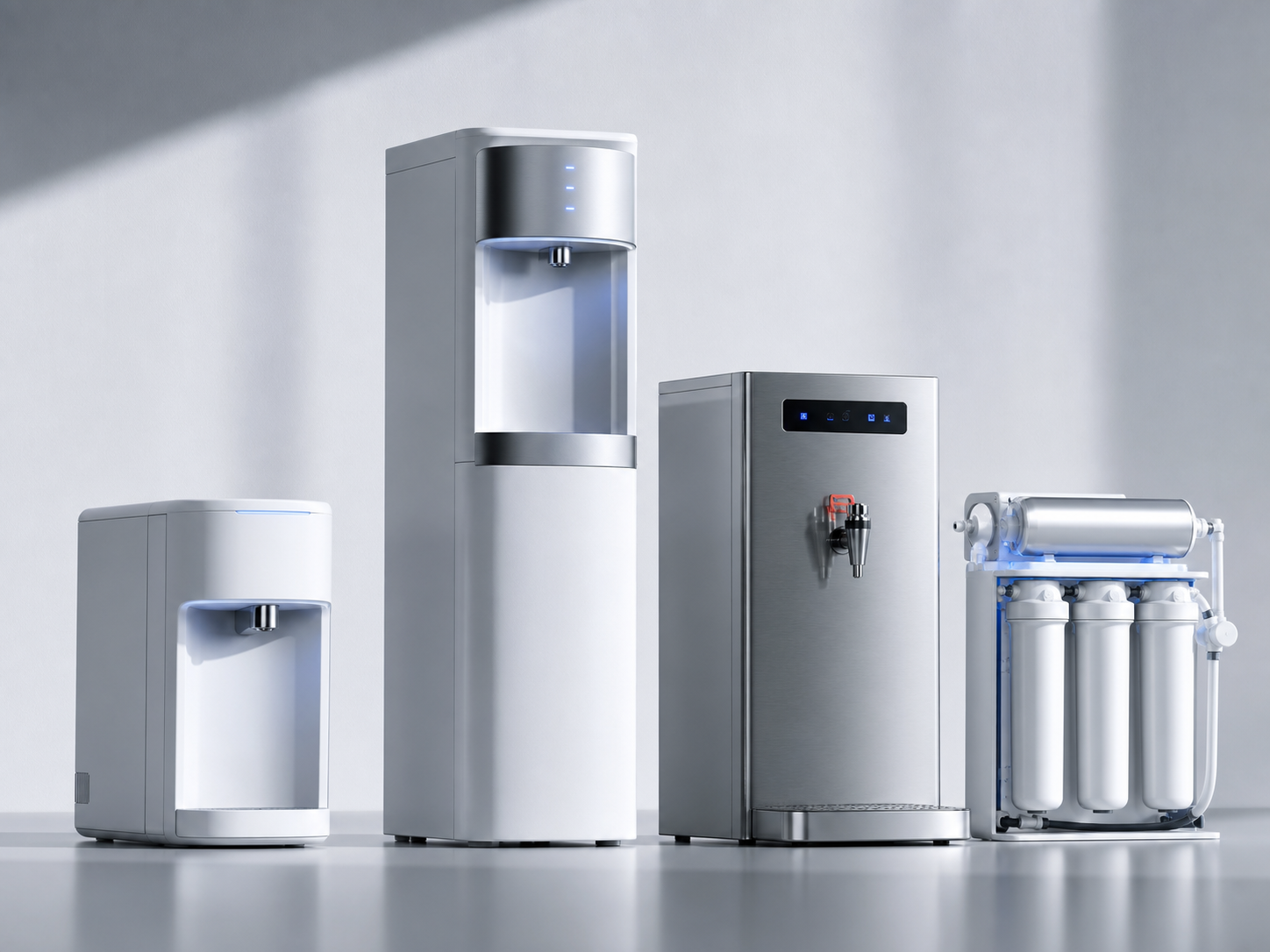
01 — Scenario pressures
Staff, patients and visitors need ordinary drinking-water access. Dental treatment, sterilization, laboratory, dialysis and pharmaceutical water require separate technical assessment.
Public, staff and support areas differ in access, water options, cleaning routines and management responsibility.
Equipment selection does not establish medical compliance; site requirements and service boundaries must be confirmed with the responsible team.
02 — People and water-use profile
This page covers drinking water for people in a healthcare facility, not water for treatment or medical equipment.
Identify staff, patient and visitor drinking points, opening patterns and the team responsible for each area
Confirm required water options and the facility's own cleaning and operating procedures
Review source water, power, drainage, access, installation location and maintenance responsibility
03 — Recommended direction
Separate everyday drinking points from clinical, laboratory and equipment process-water requirements.
Assess published commercial drinking-water categories against each location; no category is presented as a medical device.
Clarify facility procedures, installation conditions, maintenance access and regional support before delivery.
04 — System composition
Define which people and ordinary drinking points are in scope.
Confirm site water conditions and the drinking options needed in each identified area.
Consider access, circulation, cleaning routines and the facility's operating procedures.
Check water, power, drainage, space, access and any additional site work.
Agree who handles daily cleaning, filter care and service coordination.
05 — Product-category direction
These links lead to existing product categories; no SKU is presumed or invented.
A published commercial category to assess for identified compact drinking points; suitability depends on the location and selected configuration.
02A category-level option when source-water conditions and the intended drinking use support treatment planning.
03A route to assess when several ordinary drinking points and site infrastructure justify coordinated planning.
06 — Installation conditions
Confirm the institution's own hygiene, access and operating requirements with its responsible team.
Review water supply, power, drainage, space, circulation and service access for each point.
Confirm the applicable service region, standard scope and any separately assessed piping, drilling or electrical work.
07 — Service capability
Confirm water, power, drainage, access and the boundary of any additional site work before delivery.
02Keep filter supply and routine care connected to water conditions, use and the selected configuration.
03Connect parts, technical judgement and repair coordination to the equipment after handover.
Related knowledge
Use a site-based checklist for locations, use patterns and operating conditions.
02Check water, power, drainage, access and additional site work before delivery.
03Connect routine care to the selected equipment and the facility's responsibilities.
08 — FAQ
No. It covers everyday drinking water for people in a healthcare facility. Dental treatment water, sterilization, laboratory, dialysis and pharmaceutical process water have separate technical and compliance requirements and need an independent assessment.
No. No medical-grade, sterile-water, pathogen-removal or healthcare-certification claim is made. The facility's own requirements and procedures must be confirmed with its responsible team.
Yes. Assess ordinary drinking points by location and water-use needs, then confirm the product configuration, site utilities and service access for each area.
Confirm the in-scope drinking points, facility procedures, water and power, drainage where required, access, service responsibility and any additional site work.
The facility should assign routine cleaning and checks. Filter type, replacement arrangements and any available service depend on the selected configuration and service region.
09 — Project inquiry
Share the setting, drinking points, use pattern and known water, power and drainage conditions so the next step starts from facts.